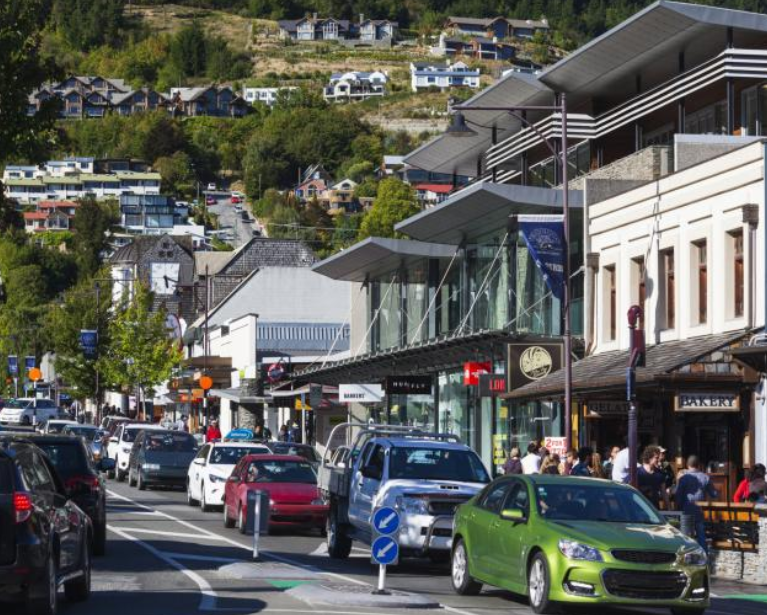
Is New Zealand really the most beautiful country in the world?

We sell the world a postcard and then punish anyone who turns it over. The published record — and our own talent — tells a harder story.
It is the most reliable line we export. Put a New Zealander on an American or British couch and within a minute it arrives, unprompted: New Zealand is such a beautiful country. Clean, green, friendly, honest — paradise at the bottom of the world.
In The Newsroom, Jeff Daniels’s news anchor is asked why America is the greatest country on earth, refuses to play along, and reads the rankings back until he lands on the verdict nobody wanted: America is not the greatest country in the world anymore. The speech still stings because it does the one thing patriotism forbids — it checks.
Watch that video at the top of this column, then consider the rest.
So let us check. Not the scenery, which is real, but the story we wrap around it: that this is the cleanest, greenest, fairest, least corrupt little country going.
Strip away the cinematography and read the record, and a different New Zealand shows up — one we work hard not to look at, and harder still to let anyone else mention.
Contents
The postcard is the alibi
The scenery in the advertisements is real; what they crop out is how little of it is left, and what we did to the rest.
More than 90 per cent of our lowland forest — the warm green country where most of us actually live — was cleared, much of it burnt for pasture.
We hunted the huia, the black-and-white bird whose tail feathers were our highest mark of status, to extinction by 1907, then made black the national colour as though that were homage.
Two-thirds of our monitored rivers are unsafe to swim in; after heavy rain you cannot swim at the beaches of our largest city because the sewage gets there first.
Clean and green is not a measurement. It is a slogan.
The myths we sell ourselves
We tell ourselves we are a nation of homeowners.
Ownership peaked at 73.8 per cent of households in 1991 and has fallen since to its lowest level in almost seventy years, even as our houses became some of the least affordable in the developed world.
We tell ourselves we are incorruptible. We were ranked the least corrupt country on earth for years; in the 2024 index we slipped to fourth, with Transparency International’s own New Zealand chapter warning we have surrendered that standing.
Being hard to catch is not the same as being clean.
The cost of the cringe
Here is the part that never makes the brochure.
New Zealand has one of the worst rates of school bullying in the developed world and the highest youth suicide rate in the OECD — close to three times the rich-world average.
These are not loose facts sitting beside our self-image; they are produced by it.
The same instinct that drives our talent overseas — what we genially call tall-poppy syndrome — lands hardest on the young who cannot yet leave. It is one culture operating at two ages: the reflex that hammers down the nail standing proud.
Tall-poppy syndrome is not a charming national quirk. It is a culture that punishes ambition in person and claims it in absentia — and the bill lands in our emigration figures and our suicide statistics alike.
The crime we don’t claim
When an atrocity finally put New Zealand on the world’s front pages, we were quick to note that the gunman was Australian. It is the one headline we will own just long enough to disown.
The crimes we keep quiet are the darker story.
We record among the highest rates of family and intimate-partner violence in the developed world — a 2019 study found 55 per cent of women here have suffered some form of partner abuse — which is why the Salvation Army has called us the world’s most secretly violent nation.
Our children fare little better: under-fives make up about one in ten of all homicide victims, and they die from abuse and neglect at well above the Australian rate.
Even the prison muster tells it — Corrections’ own research finds our inmate population unusually skewed toward sexual and violent offenders.
The mountains photograph beautifully. What happens inside the houses does not.
The ones we drove out
Ask what we do to the people who try to build something here.
When Richard Pearse flew a powered aircraft months before the Wright brothers, we ignored him until he died, paranoid and forgotten, in a mental hospital.
When our own scientists grew insulin-producing cells to treat the diabetes that is epidemic here, we slapped a moratorium on the work — though it was not even genetic modification — and the trials went to Argentina and Russia.
The pattern, which I have traced at length elsewhere, is consistent: we do not kill ambition outright; we audit it, starve it and wait for it to book a flight, then claim the success once it lands somewhere that let it breathe.
Shooting the messenger
The most New Zealand reflex of all is what happens when any of this is said out loud.
We do not check whether it is true. We go after the person who said it.
The postcard is not maintained by foreign tourism boards; it is maintained by us — by a quiet, collective preference for the picture over the print-out, and for the person who repeats the slogan over the person who holds the evidence.
If that news anchor had been handed our file instead of America’s, the honest answer would have begun the same way his did — by refusing the question. Here is roughly how it would sound.
The monologue we never hear
Here's my take on what an honest monologue about New Zealand would be like (excuse my editing):